

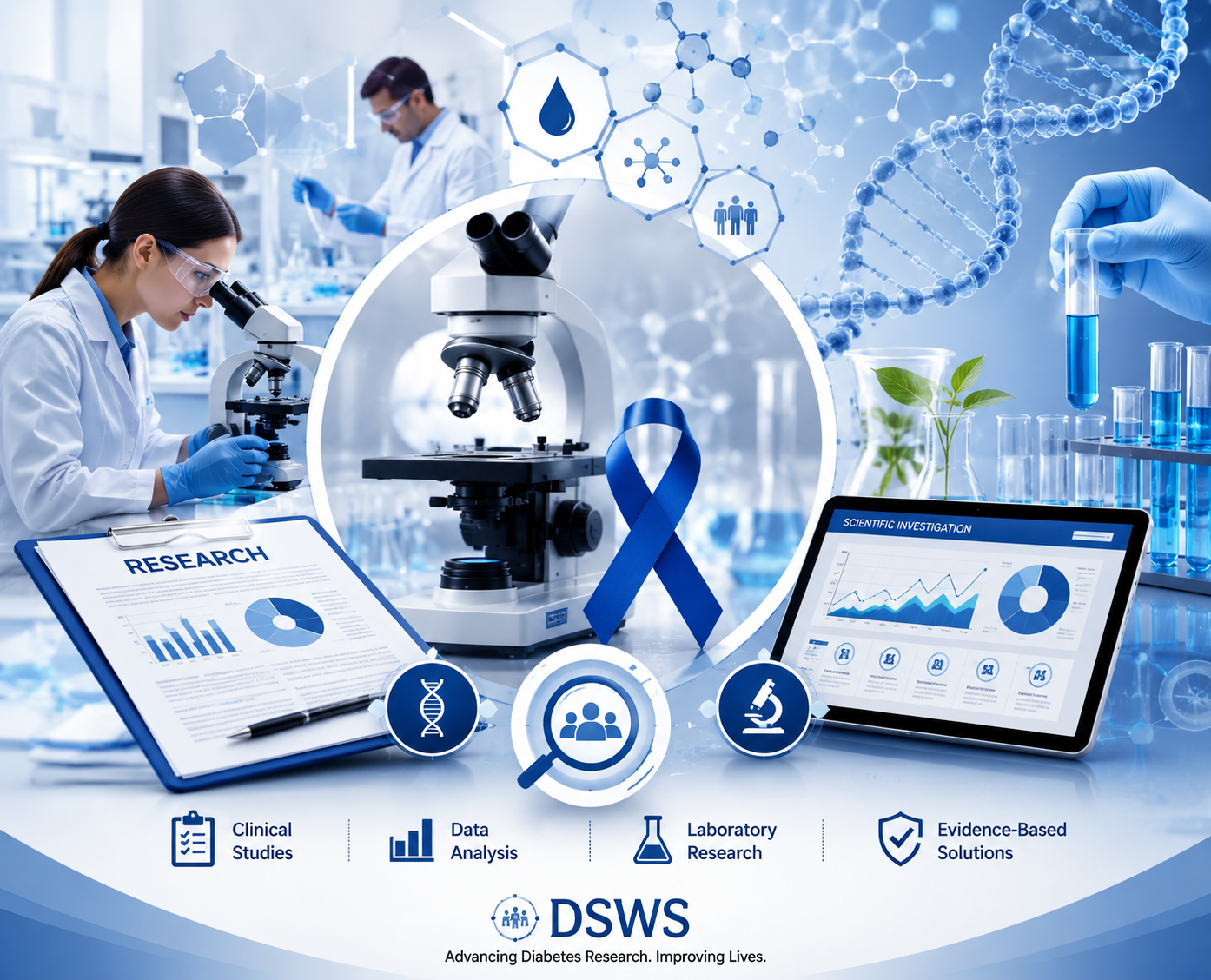
Ongoing Scientific Investigations at Diabetes Support Welfare Society (DSWS)
At Diabetes Support Welfare Society (DSWS), we are committed to advancing diabetes care through continuous scientific research and clinical investigations. Our ongoing studies focus on improving prevention, early diagnosis, treatment outcomes, and quality of life for individuals living with diabetes and related endocrine disorders.
Key Areas of Investigation
- Diabetes Prevention & Risk Assessment
- Early Detection of Type 1 and Type 2 Diabetes
- Advanced Glucose Monitoring Technologies
- Diabetic Complications and Their Management
- Obesity, Metabolic Syndrome & Insulin Resistance
- Thyroid Disorders and Their Impact on Diabetes
- Lifestyle Interventions and Patient Education
- Novel Therapeutic Approaches in Diabetes Care
Our Research Mission
By collaborating with healthcare professionals, researchers, and patients, DSWS aims to generate evidence-based insights that contribute to better treatment strategies, improved patient outcomes, and a healthier future for the community.
Advancing Science. Improving Lives. Fighting Diabetes Together.
Ongoing Scientific Investigations
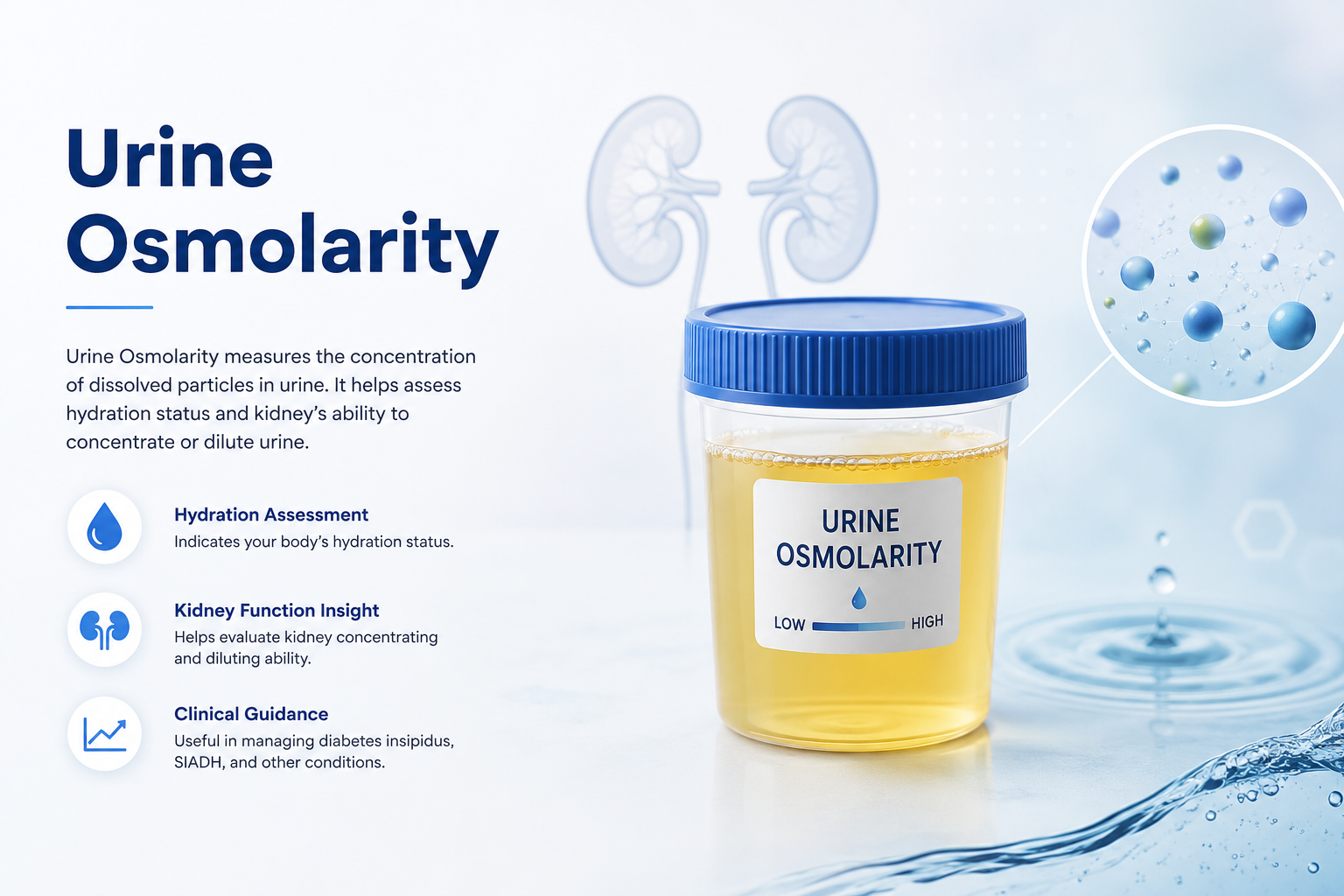
Urine Osmolarity
Why This Study Matters
Urine osmolality testing is widely used in clinical practice, yet significant inaccuracies exist due to the inappropriate use of serum-based formulas and lack of standardized methods. Variability in laboratory practices and sample handling further affects reliability, potentially impacting patient care.
Read More
VLCD
Why This Study Matters
Management of Type 2 Diabetes Mellitus (T2DM) after failure of triple oral therapy remains challenging, often requiring escalation to insulin or GLP-1 receptor agonists. While effective, these options can be costly, complex, and associated with side effects such as weight gain and hypoglycemia.
Read More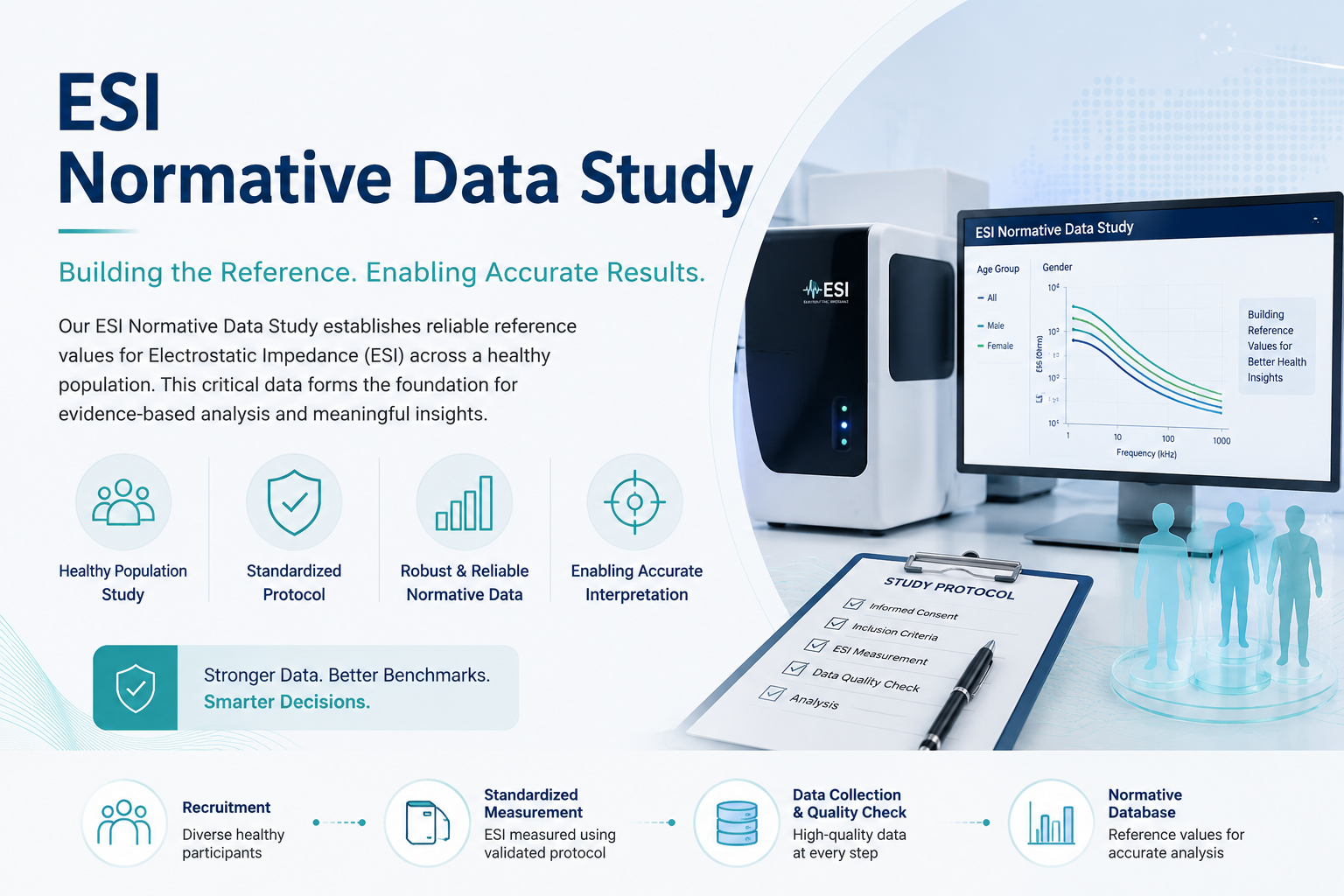
ESI Normative Data Study
Why This Study Matters
Serum testosterone plays a crucial role in diagnosing endocrine disorders such as male hypogonadism and polycystic ovary syndrome (PCOS). However, accurate diagnosis depends on reliable reference ranges, which vary across populations.
Read More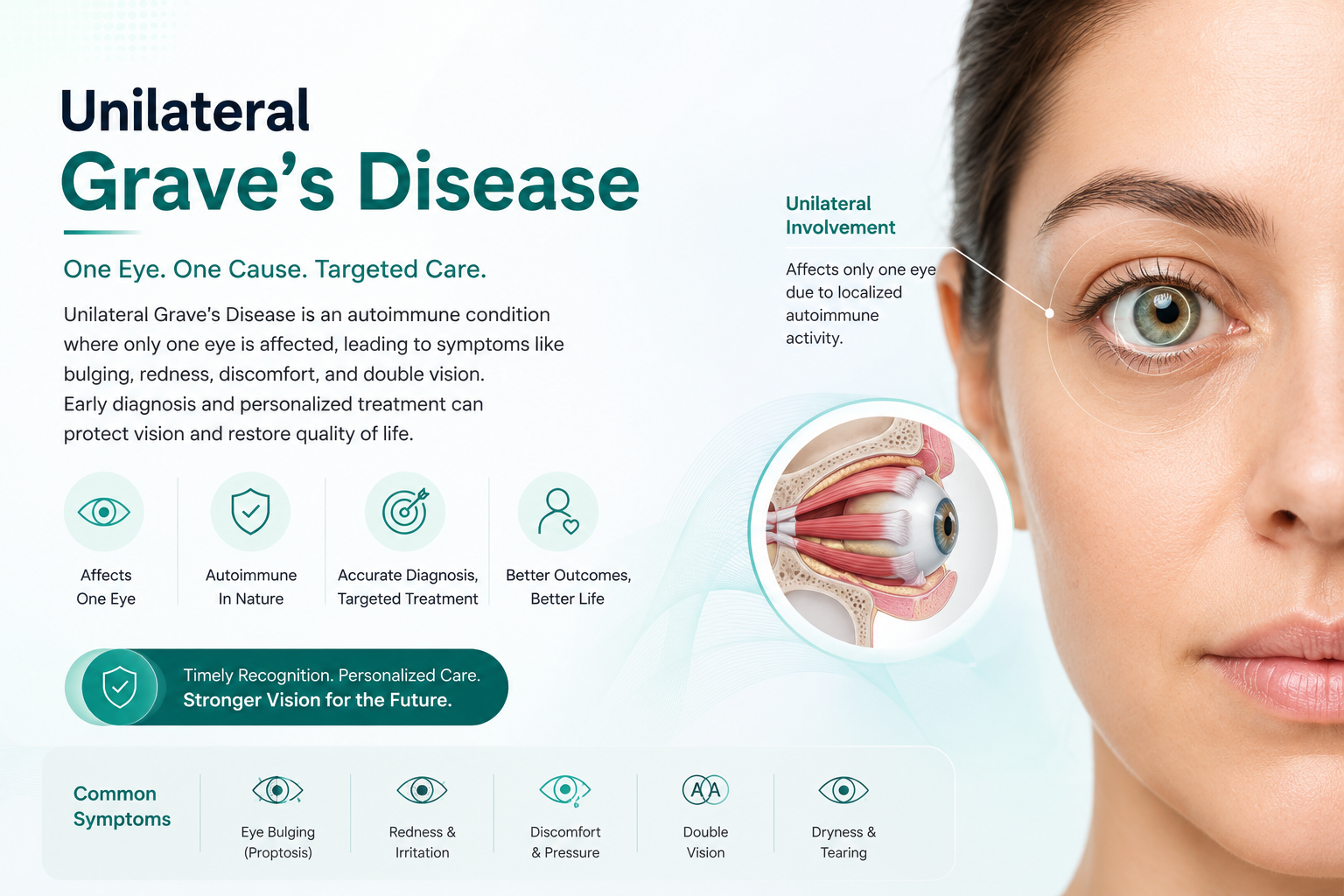
Unilateral Grave’s Disease
Why This Study Matters
Graves’ disease is typically a bilateral autoimmune condition, but unilateral Graves’ disease (UGD) represents a rare and poorly understood variant. Its natural history remains unclear, particularly whether unilateral involvement is stable or evolves over time.
Read More
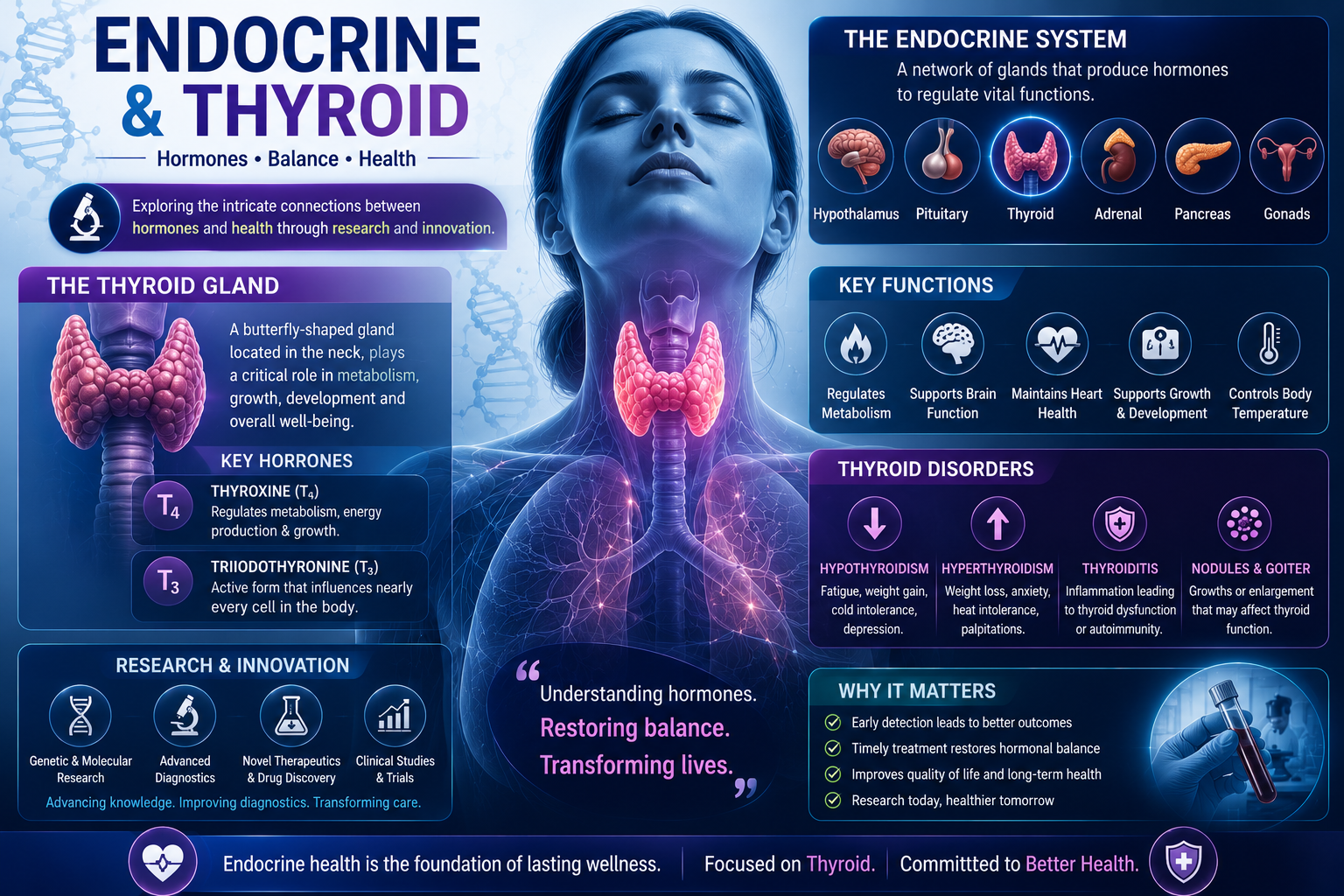
Endocrine and Thyroid
Why This Study Matters
The endocrine system and thyroid gland play a vital role in regulating metabolism, growth, energy levels, reproduction, and overall health. Research in endocrinology and thyroid disorders is
Read More